

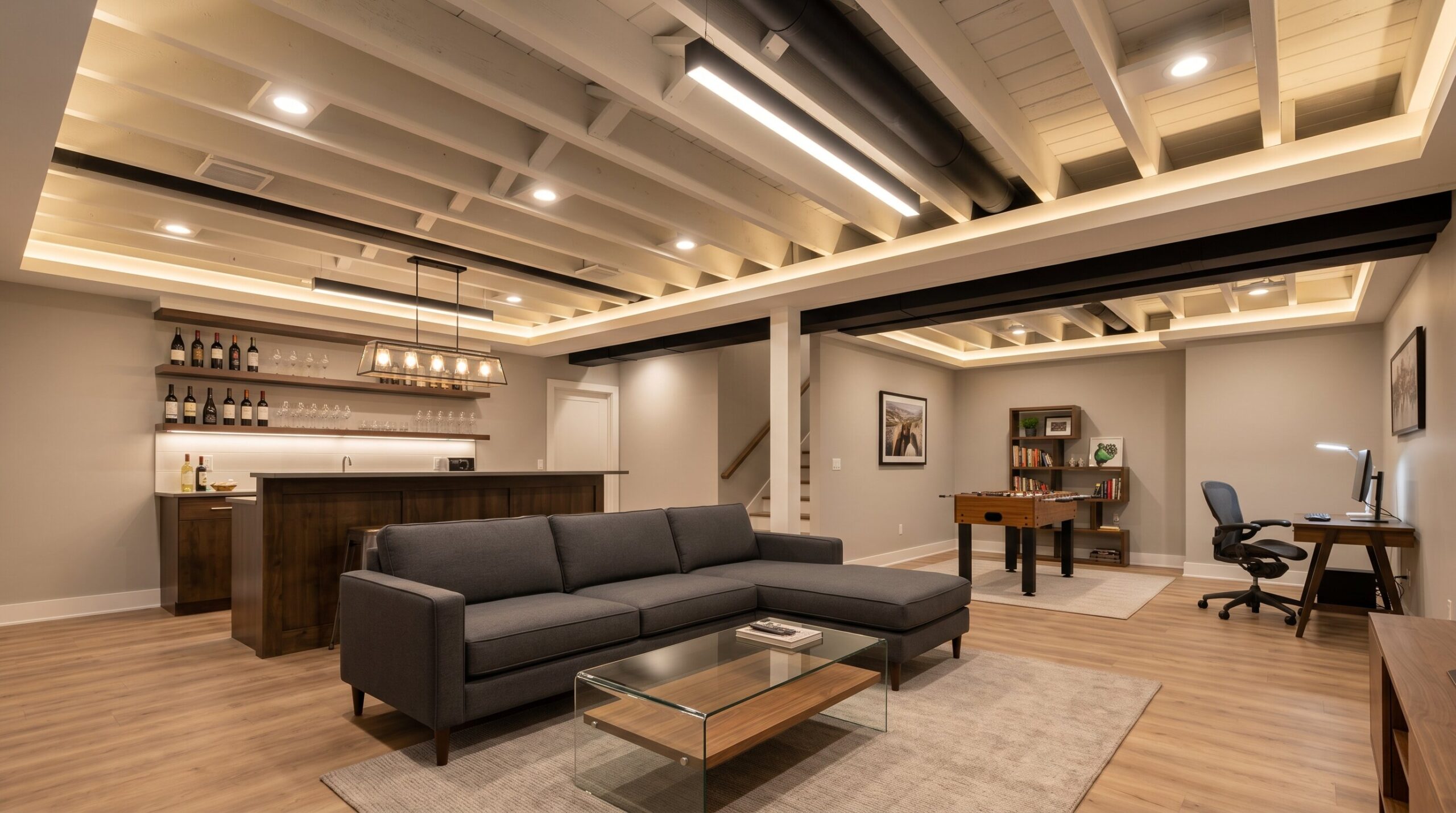
The biggest problem with most basements isn’t only darkness. It’s the heavy, compressed feeling that comes from low ceilings, exposed ducts, and limited natural light. When planning basement lighting ideas, your goal should be more than brightness. You need light that creates height, softens shadows, and makes the ceiling feel farther away. For small finished basement ideas with ceilings under 8 feet, bulky chandeliers are rarely the answer. Ultra thin LEDs, uplighting, reflective surfaces, and smart controls can transform a low basement into a calm, open, and highly livable space.
Group 1: Architectural Flush Mounts
1. Ultra Thin LED Wafers
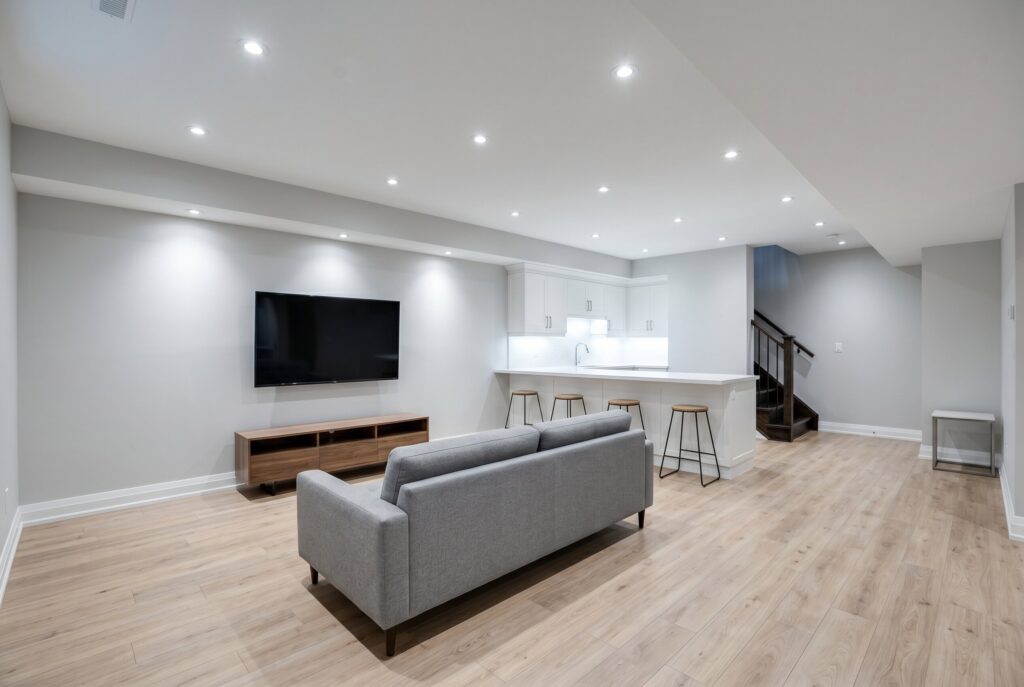
Ultra thin LED wafers are the foundation of modern basement lighting. They sit nearly flat against the ceiling and don’t require deep recessed cans, which makes them ideal for tight joist spaces. Use them as the main ambient layer in family rooms, offices, playrooms, and guest suites.
2. Perimeter Cove Lighting
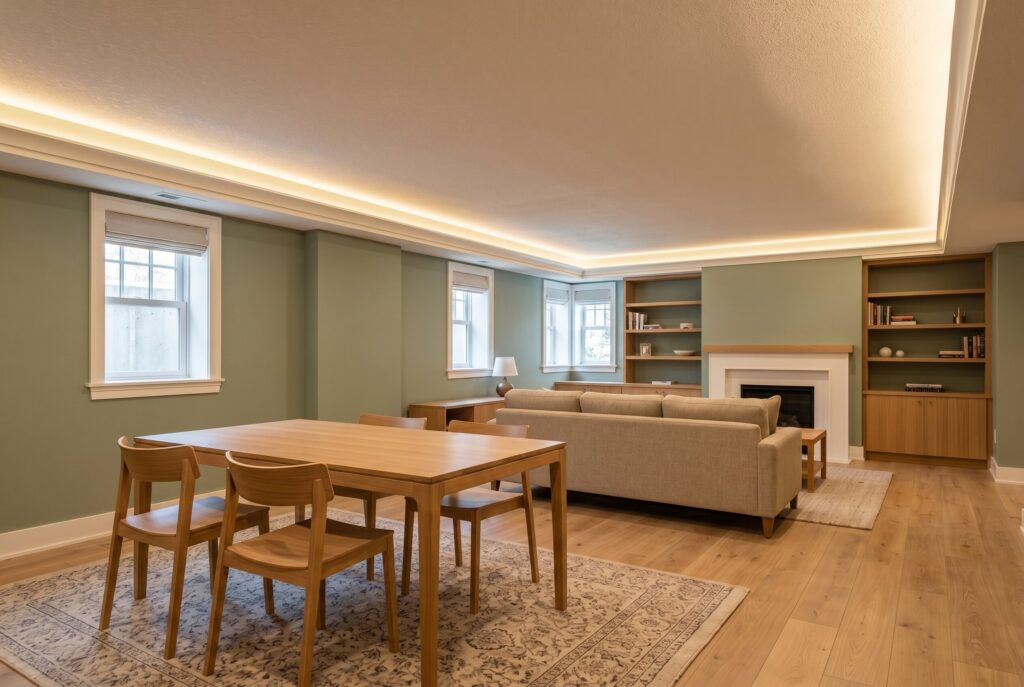
Cove lighting hides LED strips inside ceiling edges, shadow gaps, or shallow trim details. Instead of shining directly downward, the light washes softly across the upper walls. This makes the ceiling appear to float, especially when paired with sage green walls, oak furniture, and a warm neutral palette.
3. Track Lighting on Exposed Joists
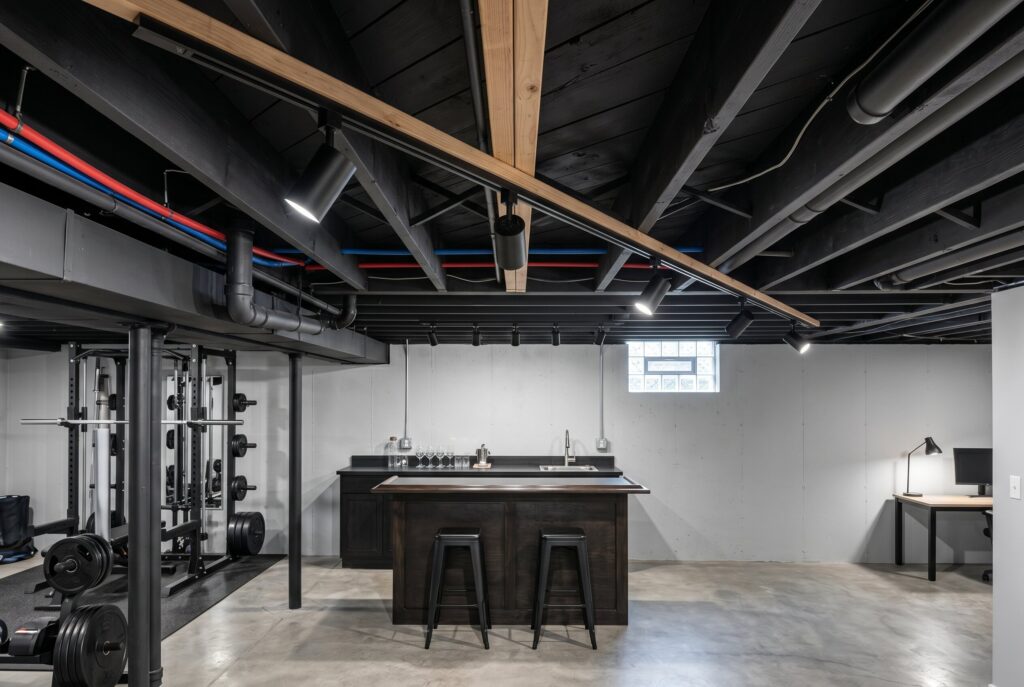
For unfinished basement ideas, track lighting is one of the most flexible solutions. Paint the exposed ceiling matte black, then mount slim track heads close to the joists. The black ceiling hides pipes and wiring, while adjustable lights let you aim brightness toward a bar, desk, gym corner, or media wall.
4. Faux Skylights
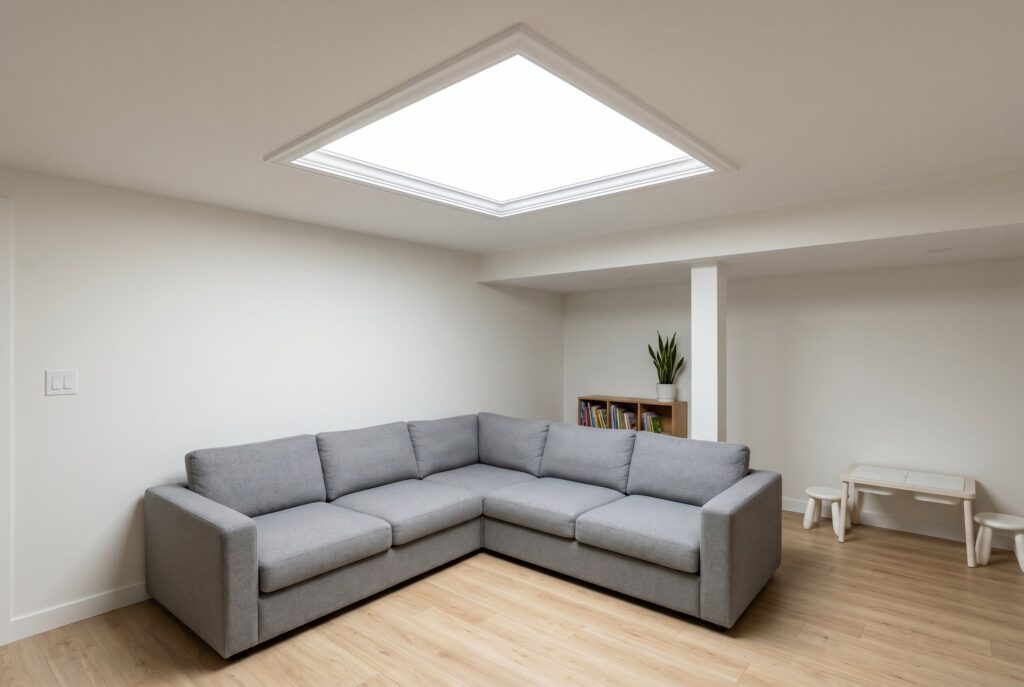
A faux skylight uses a shallow ceiling frame, translucent panel, and daylight toned LED lighting to imitate natural light. This works beautifully above a large L shaped sofa, play area, or basement office. It gives the brain a visual cue that the room has access to daylight, even when no window exists.
Group 2: The Vertical Illusion
5. Uplighting Wall Sconces
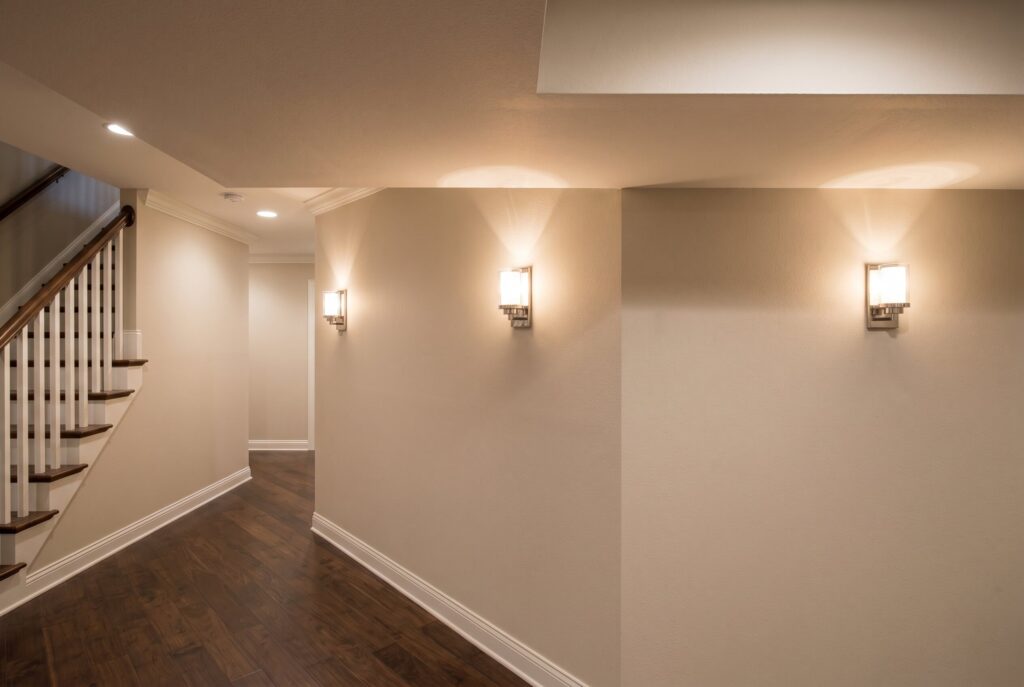
Wall sconces that cast light upward are one of the best low ceiling basement lighting tricks. Mount them around 60 to 66 inches from the floor and let the beam lift the eye toward the ceiling. This reduces the cave like feeling and adds depth to long basement walls.
6. Floor to Ceiling Vertical Slats
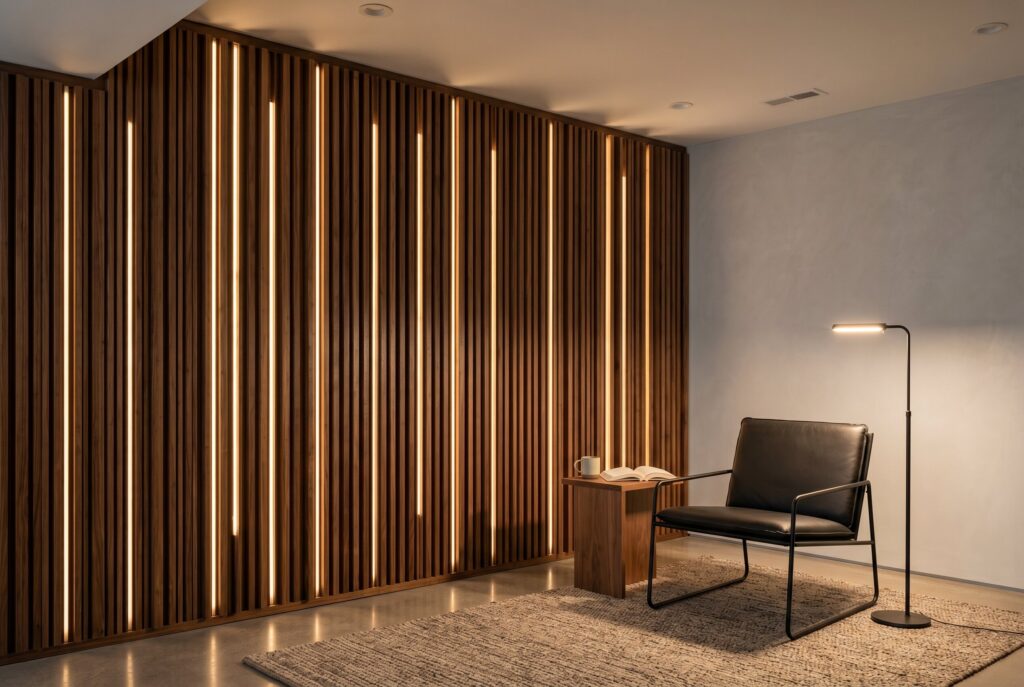
Vertical walnut or oak slats already make a wall feel taller. Add narrow LED strips between selected slats and the effect becomes stronger. This is a refined choice for modern basement lighting in Japandi lounges, home theaters, and reading corners.
7. Baseboard and Toe Kick Lighting
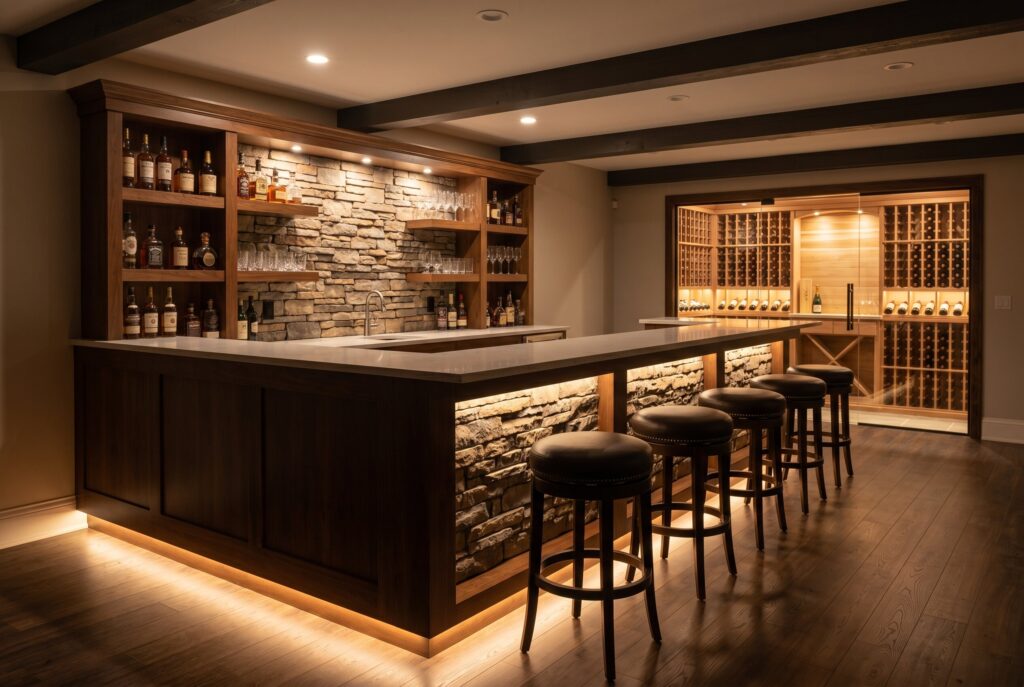
Low level lighting under cabinets, benches, bar fronts, and baseboards creates a floating effect. It separates heavy furniture from the floor and makes the room feel lighter. In a basement bar, toe kick lighting also improves nighttime movement without harsh overhead glare.
8. Backlit Floating Mirrors
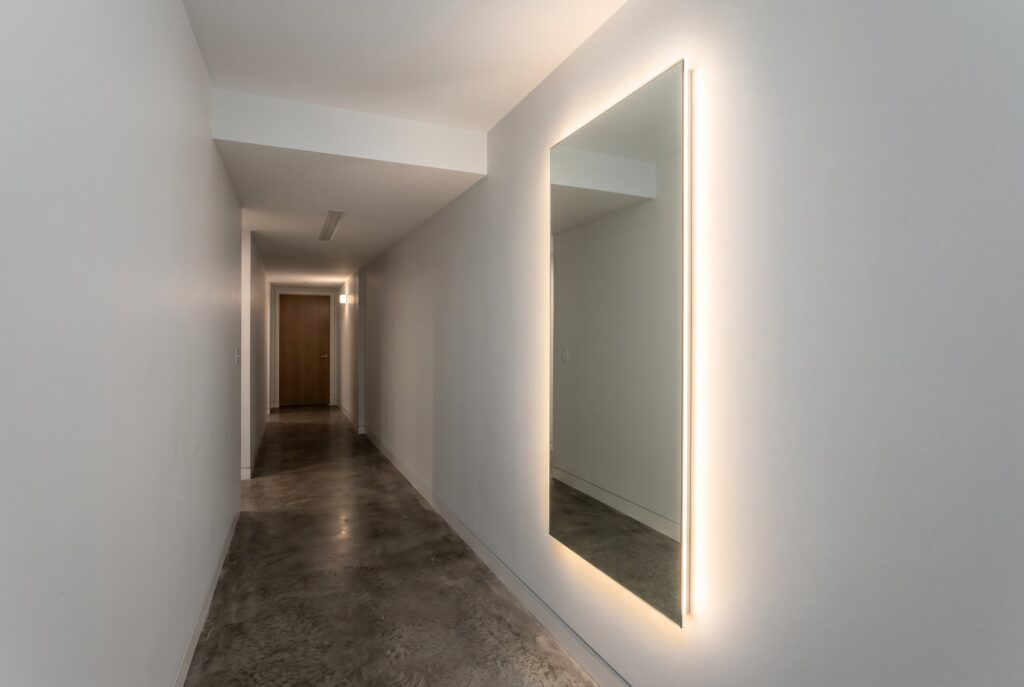
Mirrors double visible light, while backlighting softens their edges. Use a tall backlit mirror in a basement bathroom, gym, or hallway to visually expand a narrow space. The glow around the mirror feels polished without taking up ceiling height.
Group 3: Lumens, Temperature & Smart Controls
9. The 4000K Daylight Sweet Spot
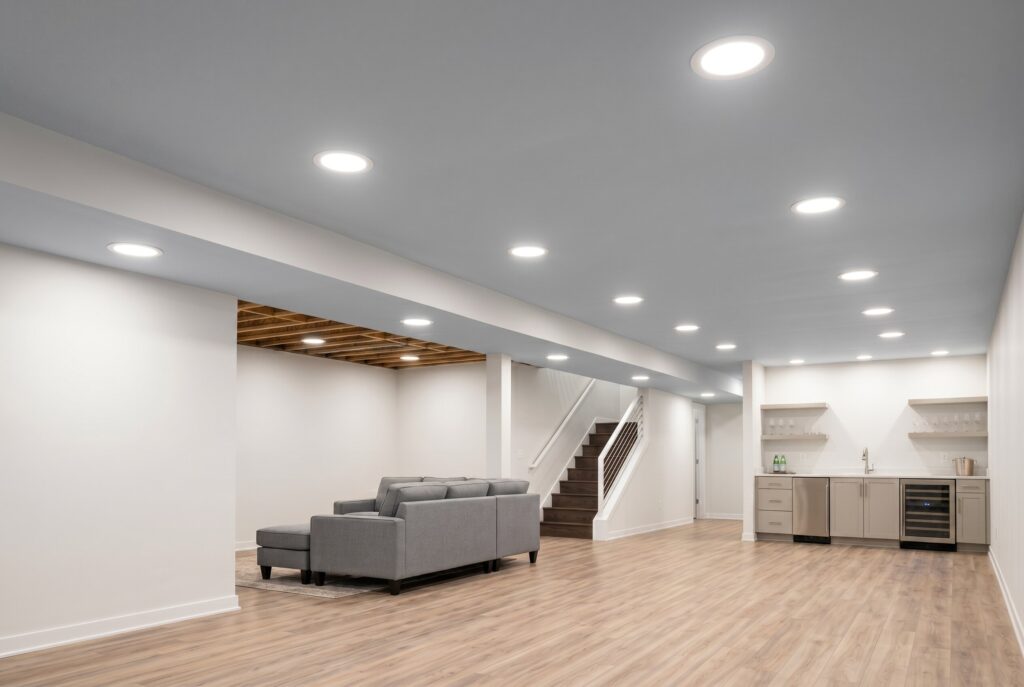
Basement lighting should feel bright without becoming sterile. A 4000K bulb often works well because it feels cleaner than warm yellow light but softer than harsh blue white light. Use warmer 2700K to 3000K light only in theater zones or cozy evening lounges.
10. The 50 Lumen Rule
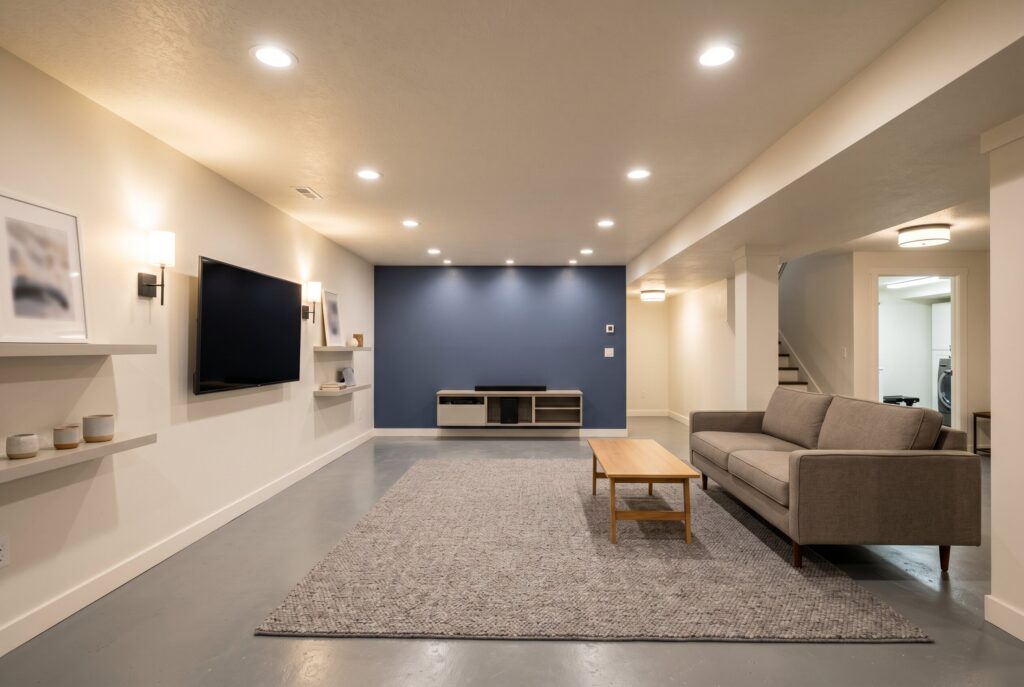
Don’t guess how much light you need. A basement living area usually needs about 30 to 50 lumens per square foot, depending on wall color, ceiling height, and room function. Offices, gyms, and laundry areas need stronger task lighting than TV rooms.
11. Multi Zone Dimmer Switches
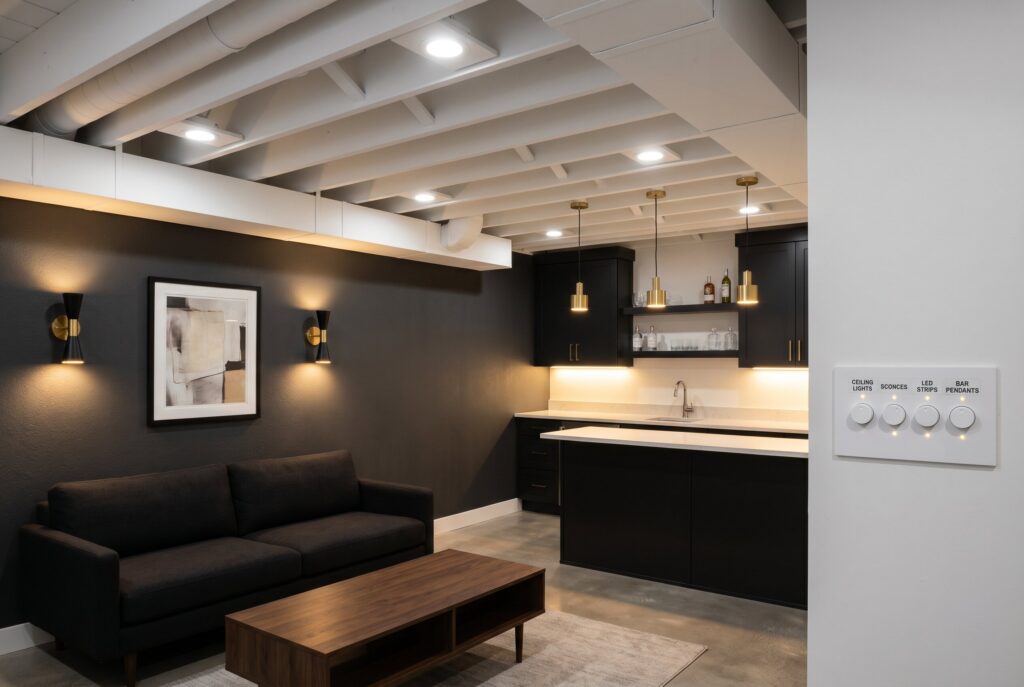
Layered basement lighting works best when each zone has its own control. Put ceiling lights, sconces, LED strips, and bar lights on separate dimmers. That way, the same basement can shift from bright family activity to soft movie night without changing fixtures.
12. Circadian Rhythm Bulbs
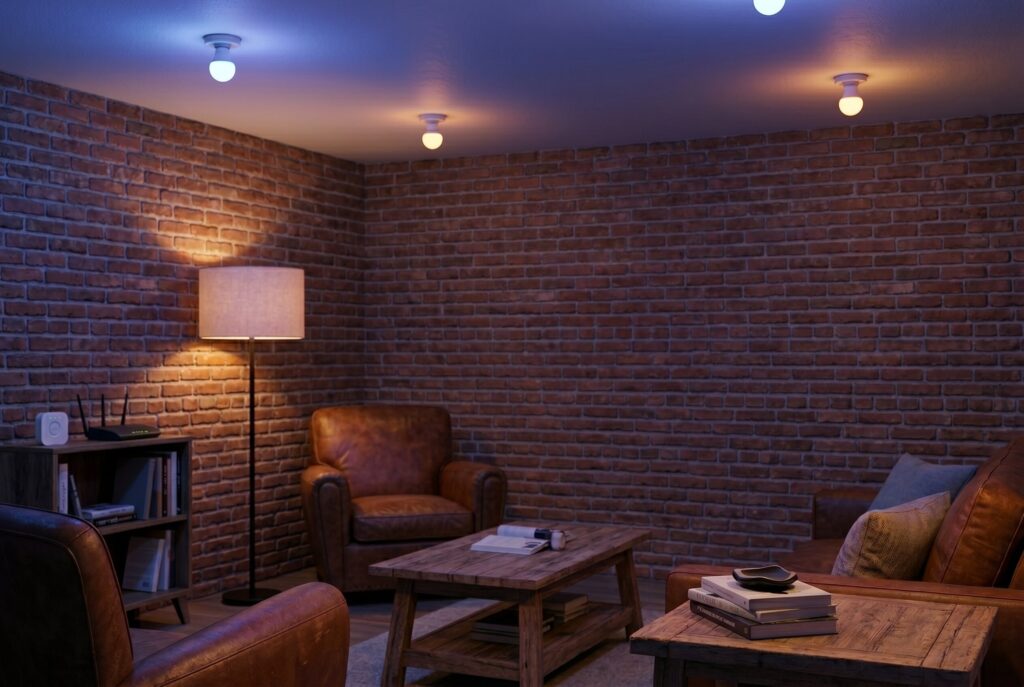
Smart bulbs can adjust throughout the day. Use brighter neutral light during work or exercise, then shift to warmer tones in the evening. This is especially helpful in basements with little natural light because the room can otherwise feel disconnected from the day outside.
Group 4: Strategic Lighting Solutions for a Brighter Basement
13. LED Cove Lighting
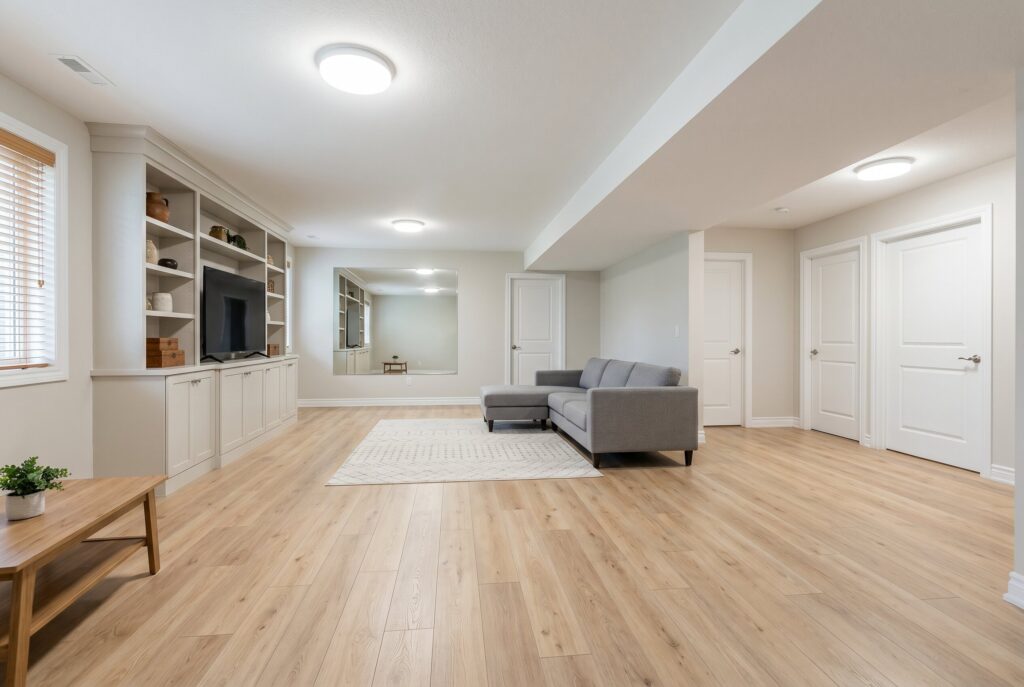
LED cove lighting installed along ceiling edges creates soft, indirect illumination that visually lifts the ceiling and reduces dark shadows. This technique helps a basement feel more open and spacious without adding glare. Combined with recessed lighting, it can dramatically improve the brightness and atmosphere of the room.
14. Integrated Wet Bar Accent Lighting
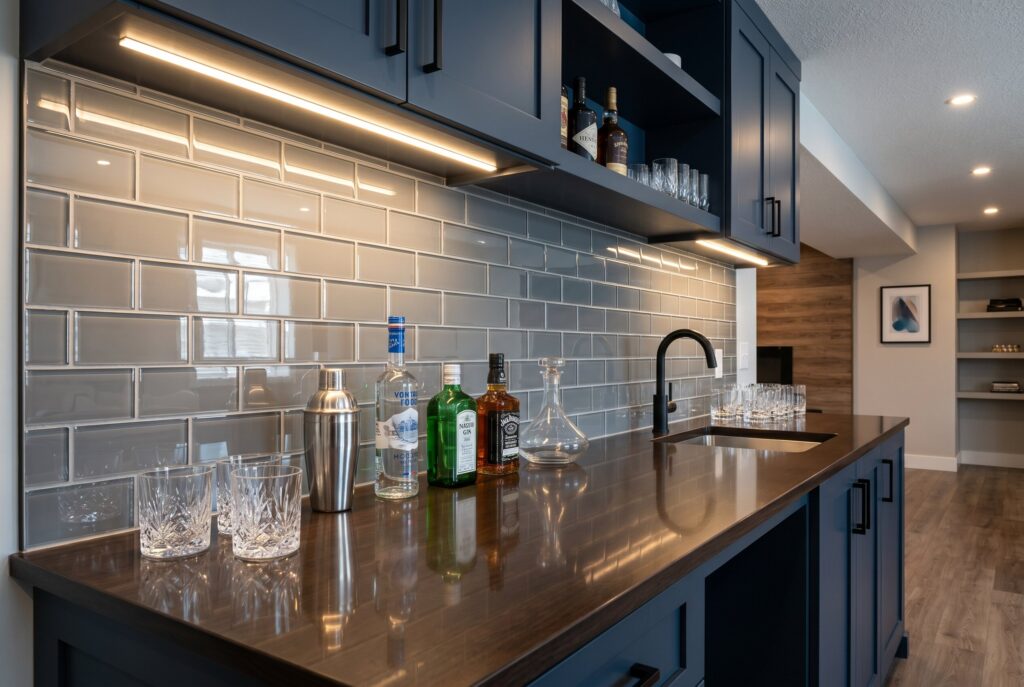
Integrated LED lighting beneath cabinets and shelving can transform a basement wet bar into a focal point. The layered illumination enhances visibility, adds dimension, and creates a sophisticated ambiance without requiring additional overhead fixtures. This lighting strategy helps the entire basement feel brighter and more welcoming.
15. Linear Pendant Lighting for Activity Zones
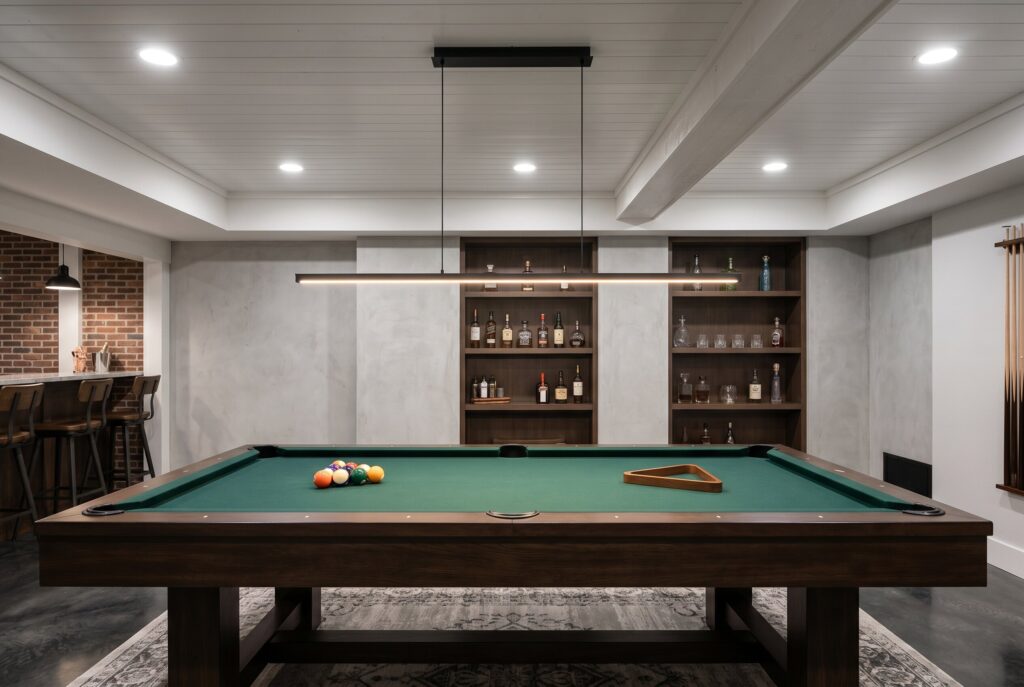
A slim linear pendant helps define activity zones while providing even, glare-free illumination. Whether placed above a pool table, bar, or dining area, it creates a clear focal point and enhances both functionality and ambiance in the basement.
16. Minimalist Fireplace Accent Lighting
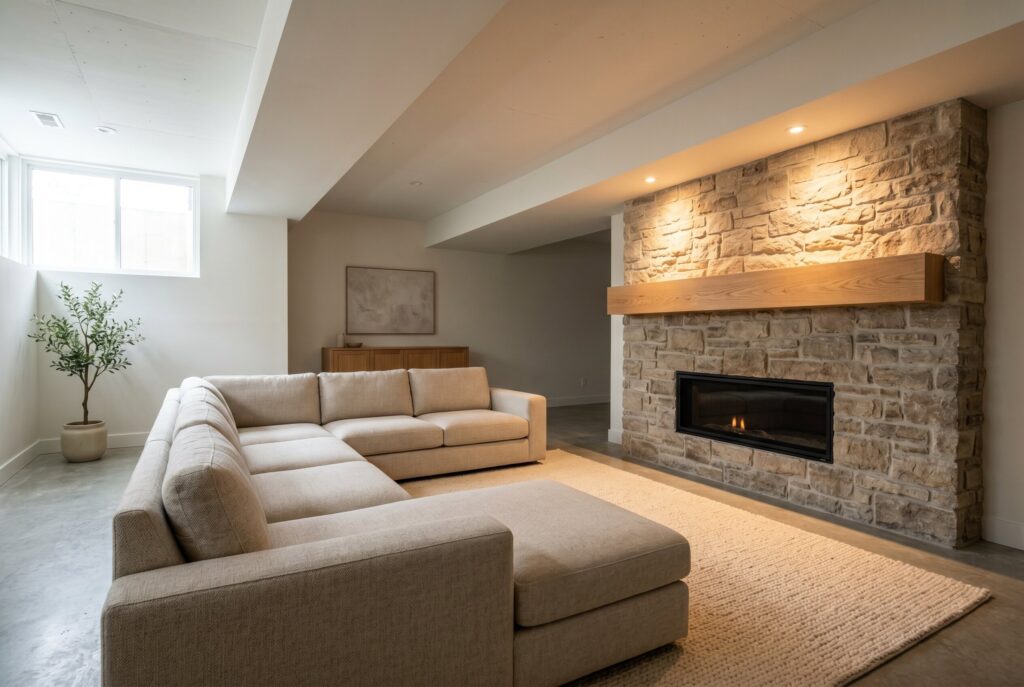
For a basement fireplace wall, keep the lighting restrained. Two small recessed spotlights aimed at a simple oak fireplace mantel can create warmth without clutter. This works especially well in Organic Modern rooms with a large U shaped sofa and soft textured rug.
17. Task Lighting for Functional Focus
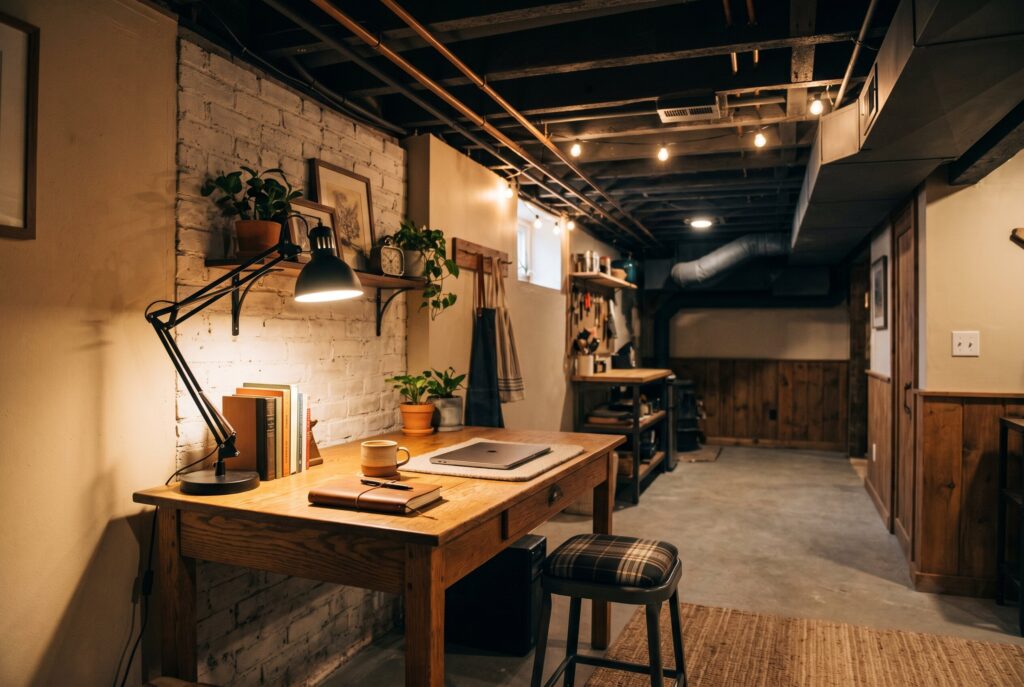
Well-placed task lighting helps define activity zones and directs attention to where it matters most. Whether illuminating a home office, bar area, or entertainment space, focused lighting reduces the visual prominence of exposed ceiling components by keeping the eye engaged at the room level. This approach improves both functionality and overall aesthetics.
Conclusion
The success of basement lighting ideas depends on layering, not on one expensive fixture. Start with ultra thin LEDs for general brightness. Add uplighting to stretch the walls upward. Use LED strips under cabinets, along slats, and around mirrors for depth. Then support the lighting plan with reflective floors, pale walls, glossy surfaces, and smart dimmers. A low basement doesn’t have to feel cramped. With the right lighting strategy, it can become a warm lounge, focused office, relaxed theater, or family retreat where every corner feels intentional.
Related Articles
Basement Ideas: 27 Pro Designer Finished Transformations
Basement Ceiling Ideas: 13 Pro Ways to Hide Exposed Pipes
Basement Flooring: 7 Best Materials (Pros, Cons & Costs)
Basement Wall Ideas: 23 Wall Coverings (No Mudding!)