

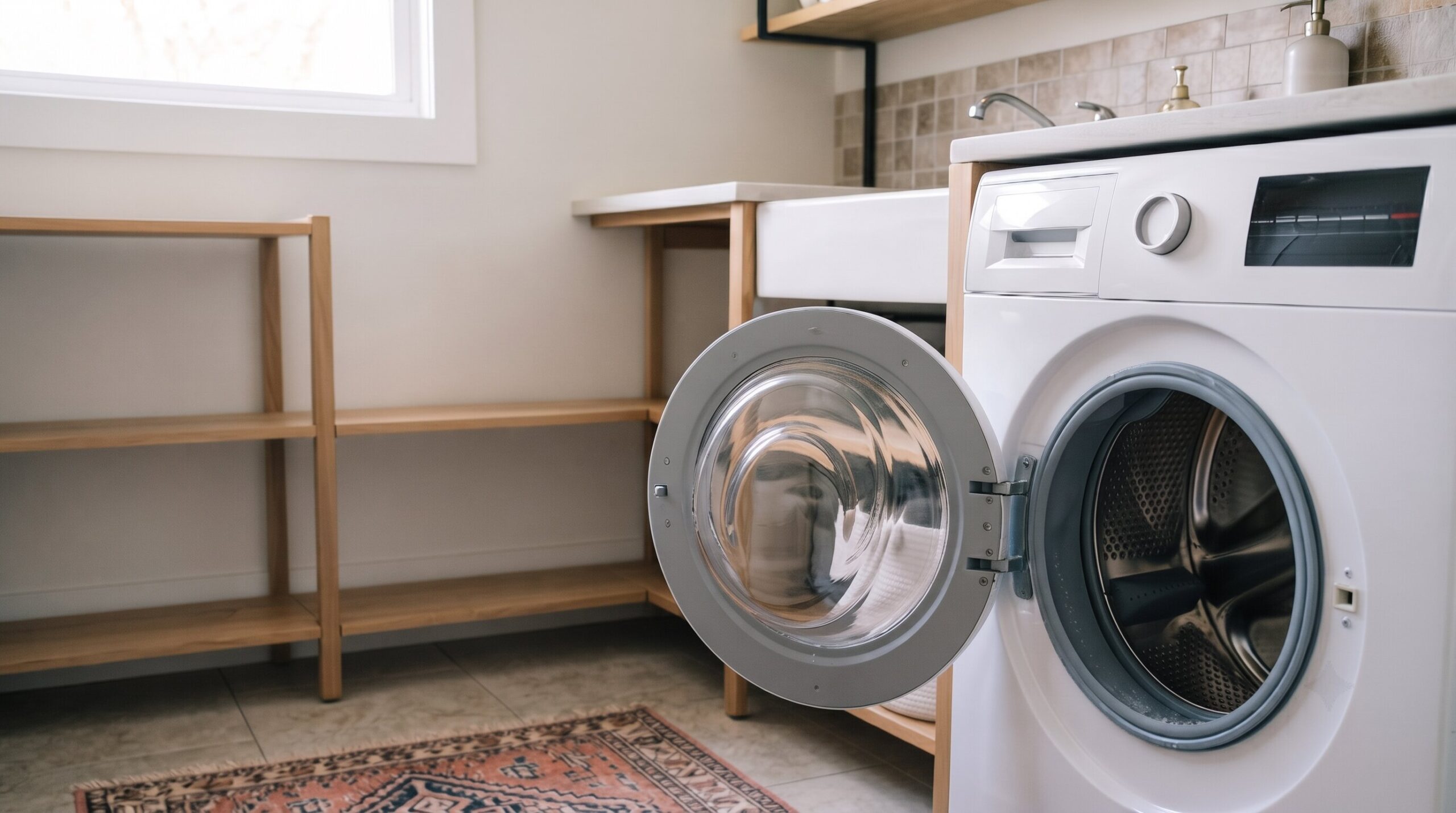
Skip the viral baking soda and vinegar mix if you’re making a DIY washing machine cleaner. The fizz may look impressive, but the two ingredients largely neutralize each other, reducing their cleaning effectiveness.
A better approach is to use them separately. Run one cycle with washing soda or borax to break down detergent residue and grime, then a second cycle with white vinegar to help remove mineral buildup and lingering odors. This clean washing machine naturally method gives each ingredient time to work on its own. Deep clean your washer every 1 to 3 months, and always check your owner’s manual before using homemade cleaners.
The Chemistry Mistake: Stop Mixing Baking Soda and Vinegar
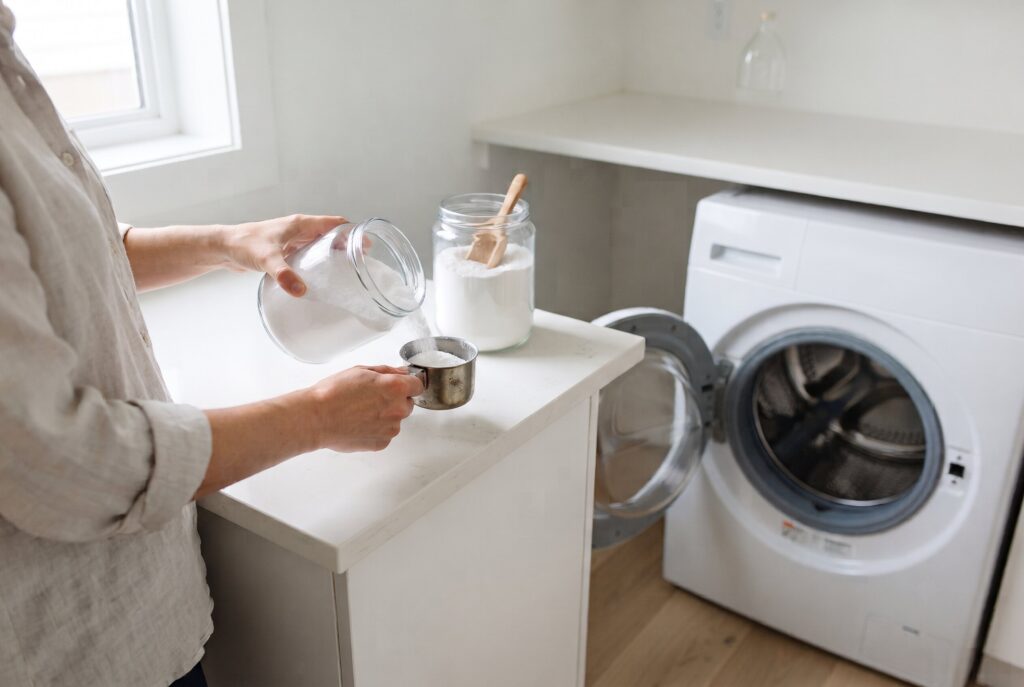
A lot of homemade washing machine cleaner recipes promise magic because baking soda and vinegar foam when combined. The problem is simple: the reaction is the show, not the solution. Once they neutralize, the mixture becomes much weaker for breaking down grime.
That is why this recipe upgrades the powder phase. Washing soda, also called sodium carbonate, is more alkaline than baking soda. Borax is another strong laundry booster that helps soften water and lift residue. Both are better choices when your washer smells because of old detergent, fabric softener, and greasy soil.
Vinegar still has a place, but it should come later. Used separately, white vinegar can help with mineral deposits and stale odors. Used at the same time as alkaline powder, it wastes its strength.
Safety First: Never Mix Vinegar and Bleach
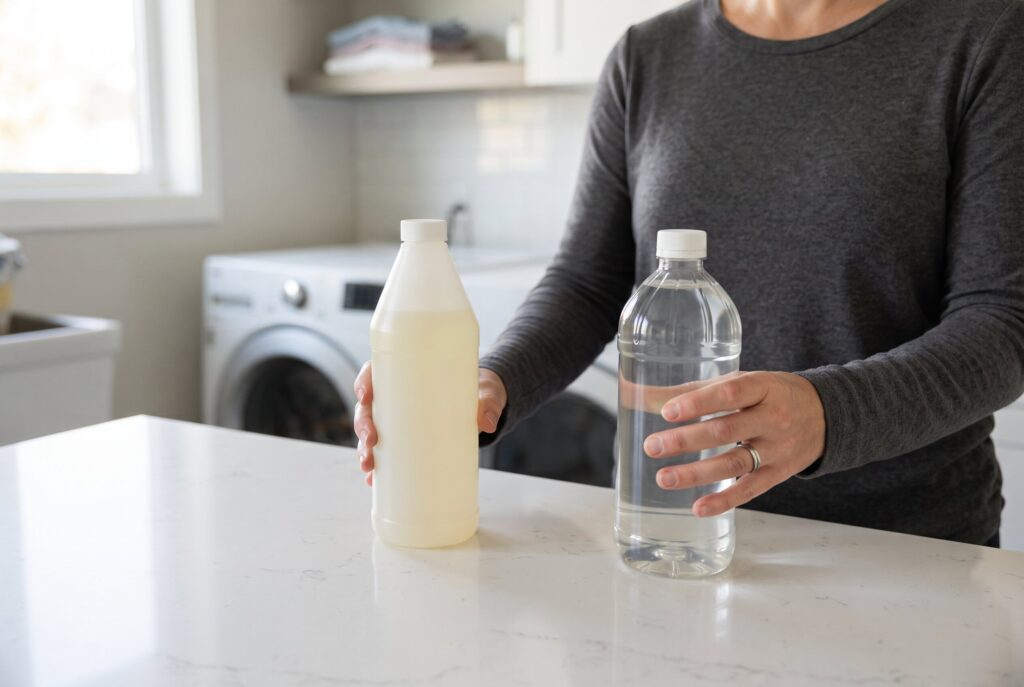
This warning matters more than shine, scent, or speed. Never mix vinegar with chlorine bleach. That combination can release toxic chlorine gas. Don’t mix vinegar with hydrogen peroxide in the same cycle either. Don’t stack cleaners because one recipe didn’t work fast enough.
Choose one route. If you use bleach for severe mold, follow your machine manual and rinse fully. If you use this natural method, keep bleach out of the process completely. Gloves, ventilation, and a fully empty washer are also smart.
The Natural 2 Cycle Recipe
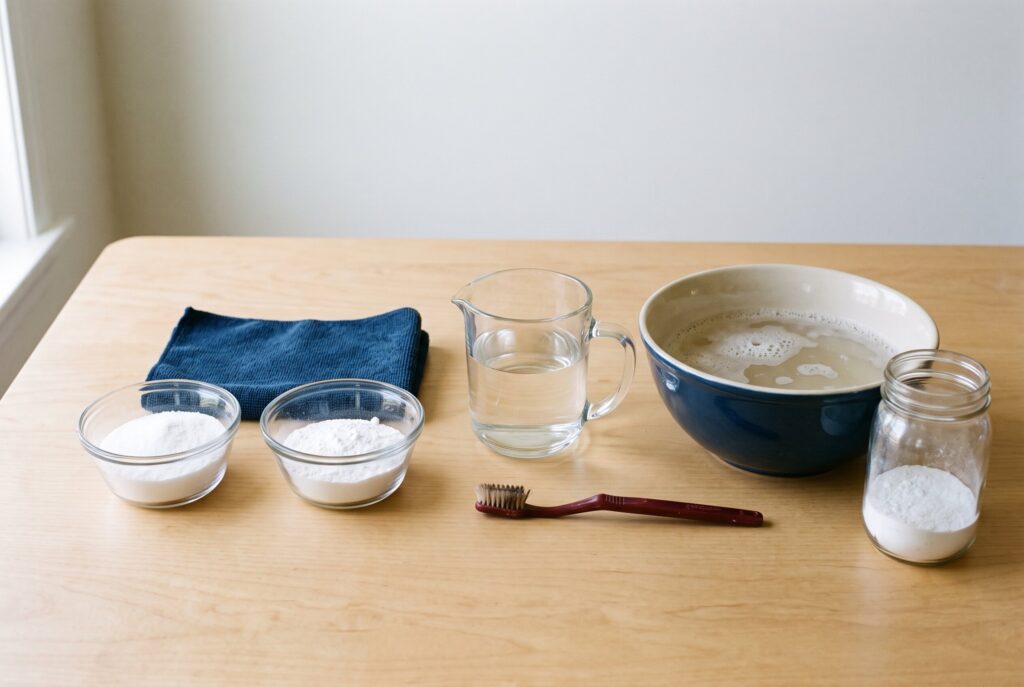
For this DIY washing machine cleaner, you need 1/2 cup washing soda or borax, 2 cups white vinegar, a microfiber cloth, an old toothbrush, warm soapy water, and optional oxygen bleach for stubborn odor.
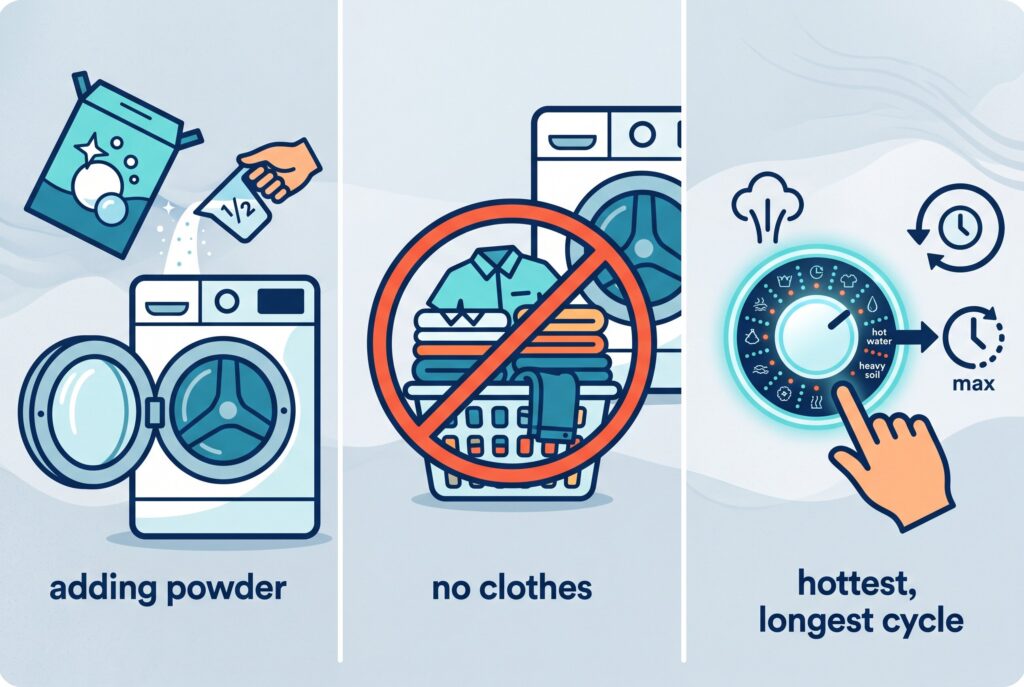
Cycle one is the scrub cycle. Add 1/2 cup washing soda or borax directly to the empty drum. Don’t add clothes. Choose the hottest, longest cycle your washer allows. This alkaline phase helps break down soap scum, detergent residue, oily film, and fabric softener buildup.
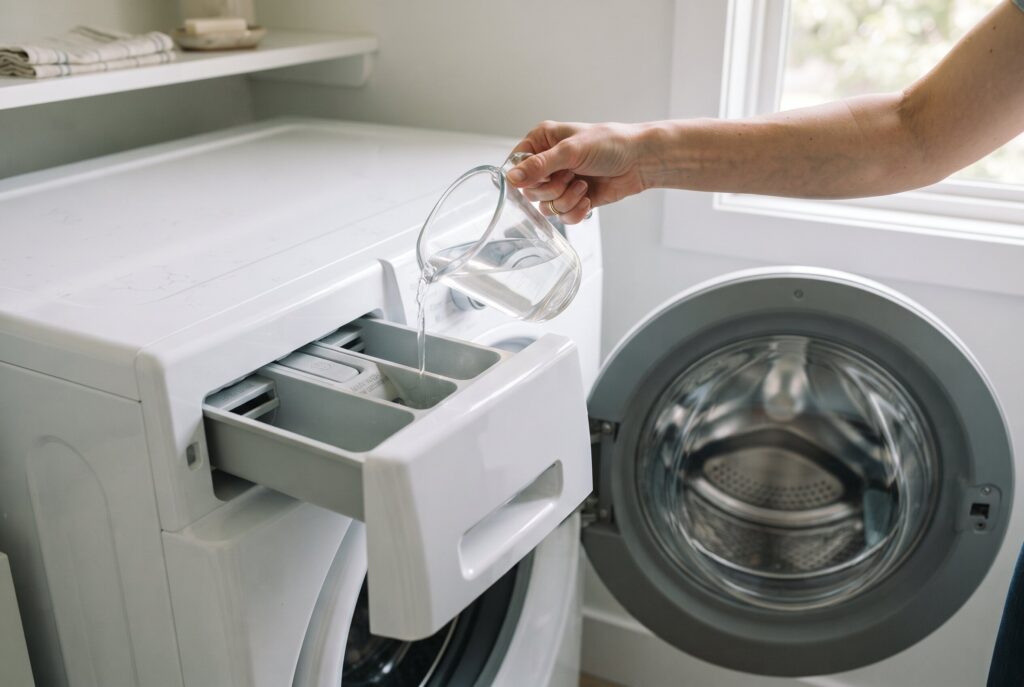
Cycle two is the rinse cycle. After the first cycle finishes, add 2 cups white vinegar to the detergent dispenser or drum, depending on your manual. Run another hot cycle. This vinegar phase helps loosen hard water minerals and freshen the internal surfaces.
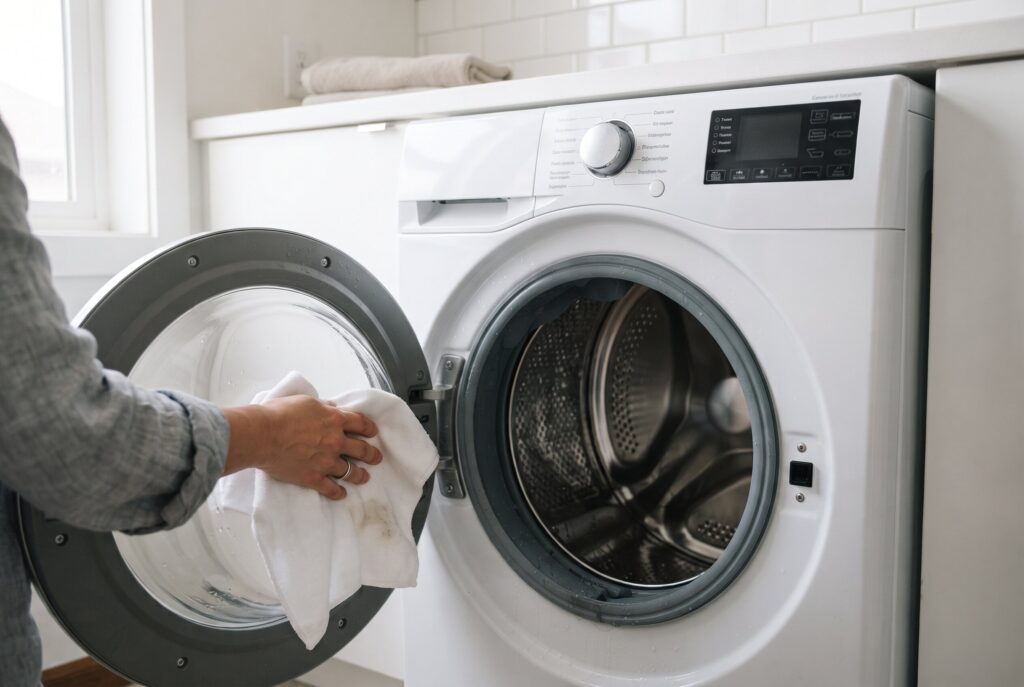
When the cycle ends, wipe the inside of the drum, door, lid, gasket, and detergent drawer. Cleaning isn’t complete until the loosened residue is physically removed.
When a DIY Washing Machine Cleaner Is Enough
Not every dirty washer needs the same cleaner. Understanding what you’re trying to remove makes your DIY recipe much more effective.
Detergent and Fabric Softener Residue
This is the most common problem in modern washers. Excess detergent, liquid fabric softener, body oils, and lint combine into a sticky film that traps bacteria and odors.
Washing soda or borax works well here because their alkalinity helps loosen greasy residue. Running the alkaline cycle first gives the cleaner time to break down buildup before the vinegar cycle flushes away what has been loosened.
Hard Water Scale
If you see white or chalky deposits inside the drum, around the detergent drawer, or on the water inlet, you’re dealing with mineral scale rather than soap residue.
White vinegar can gradually dissolve light calcium deposits, but thick scale usually requires several cleaning sessions. If mineral buildup has become heavy, a commercial descaler designed for washing machines is often more effective than repeated DIY treatments.
Mold Growing Behind the Gasket
Surface mold can usually be wiped away during routine cleaning. However, if black mold has spread deep inside the folds of the rubber gasket or into internal components, no homemade cleaner can reach every contaminated surface.
Persistent mold, recurring odors after every wash, or visible deterioration of the rubber often means the gasket should be replaced instead of cleaned repeatedly.
Biofilm Inside Hidden Components
One reason washers continue to smell after cleaning is biofilm, which is a slimy layer of bacteria that develops inside hoses, drain paths, and other hidden areas where moisture remains.
A hot cleaning cycle can reduce biofilm over time, but it cannot physically scrub every internal surface. That’s why wiping the gasket, detergent drawer, drain pump filter, and other removable parts is just as important as running the cleaning cycles.
Know When to Stop Repeating DIY Treatments
If you’ve completed two or three full cleaning sessions, removed visible residue by hand, and the washer still develops a sour or sewage-like odor within a few loads, the issue is probably mechanical rather than cosmetic.
Common causes include a clogged drain pump filter, blocked drain hose, failing door gasket, standing water inside the machine, or plumbing problems. Running additional vinegar or baking soda cycles won’t solve these issues and may simply waste time.
DIY vs Washing Machine Cleaner Tablets
DIY cleaners are cheap and flexible. A natural cleaning session may cost under $1 to $2 if you already have washing soda, borax, and vinegar. It’s a good choice for people who want a natural washing machine cleaner and don’t mind running two cycles.
Washer cleaning tablets cost more, often around $1 to $3 per clean, but they’re convenient and formulated for appliance residue. If your washer has strong odor, hard water mineral buildup, or recurring film, tablets may outperform basic vinegar and baking soda washing machine tricks.
Conclusion
The most effective DIY washing machine cleaner follows a simple principle: use the right product for the right job, instead of relying on a reaction that looks impressive but accomplishes very little. Use washing soda or borax first to break down residue. Use vinegar later to handle minerals and odor. Clean the gasket, drawer, lint filter, and visible grime by hand.
Then keep the smell from returning. Remove wet clothes quickly, use less detergent, skip heavy fabric softener, and leave the door or lid open after every load. A clean washer isn’t created by one dramatic hack. It’s maintained by air, dryness, and a simple routine that doesn’t trap moisture inside.
Related Articles
How to Clean a Front Load Washer (Don’t Forget the Hidden Filter!)
How To Clean Top Loading Washing Machine Without Taking It Apart